What Is a Varsai Certificate?
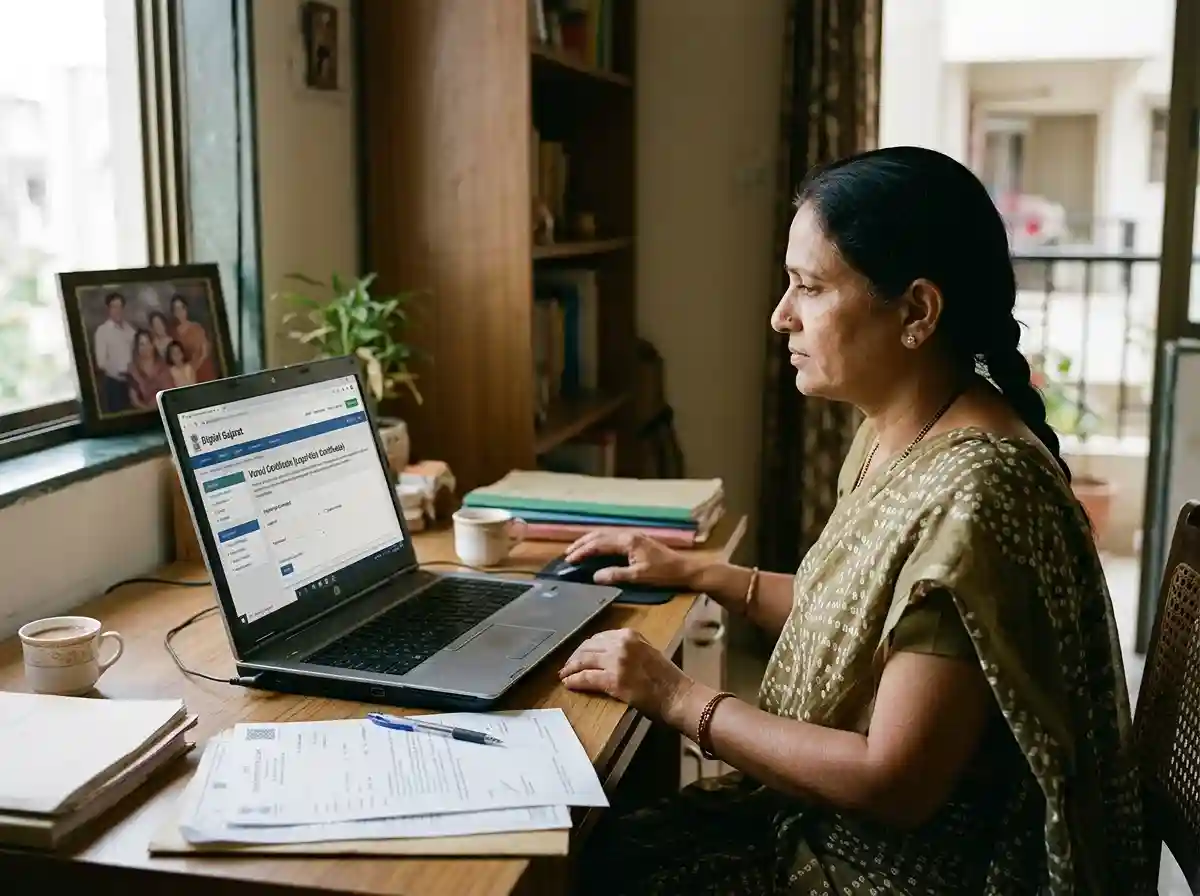
The Varsai Certificate — known in Gujarati as Varsai Praman Patra — is a government-issued legal document. It confirms the identity of the surviving heirs of a person who has died. In Gujarat, the Revenue Department issues this certificate through the Mamlatdar's office (in rural talukas) or through the Zonal Officer (in urban areas).
When a person dies without a will (called dying intestate), the family has no single legal document to prove their inheritance rights. Banks, government departments, and revenue offices all ask for proof. The Varsai Certificate is that proof. It names every legal heir, their relationship to the deceased, and their share in the estate.
The certificate is also called the Legal Heir Certificate, Waris Certificate, or Varis Patra in Gujarat. All three terms refer to the same document. Outside Gujarat, many states issue a similar document under the name "Legal Heir Certificate" or "Succession Certificate from Tehsildar."
The Gujarat government has made it possible to apply for the Varsai Certificate entirely online through the Digital Gujarat portal. The fee is just Rs 20. The processing time is approximately 60 days (2 months), not counting government holidays.
Who Can Apply for a Varsai Certificate?
Any surviving legal heir of a deceased person can apply. Indian law recognises several categories of legal heirs. The list below follows the Hindu Succession Act, 1956 and the Indian Succession Act, 1925, which Gujarat courts apply.
Class I Legal Heirs (Highest Priority)
- Spouse of the deceased (husband or wife)
- Children — sons and daughters, including adopted children
- Mother of the deceased
- Children of a pre-deceased son or daughter (grandchildren)
Class II Legal Heirs (Apply When No Class I Heirs Exist)
- Father of the deceased
- Siblings (brothers and sisters)
- Nephews and nieces
- Other relatives as defined under the Hindu Succession Act
All legal heirs listed in the Pedhinamu (the certified family tree document) are eligible to be named in the Varsai Certificate. Only one person needs to apply, but all heirs must be mentioned in the application form.
There is no age restriction on who can apply. A minor's application can be submitted by a natural guardian. NRIs can also apply through the online portal. If physical presence is required for witness verification (Javab Panch Namu), an NRI can authorise a representative in India through a notarised Power of Attorney.
Documents Required for Varsai Certificate
Keep these documents ready before you start the online or offline application. Missing even one document causes delays or rejection.
Death Certificate
Original death certificate from Municipal Corporation (urban) or Gram Panchayat (rural). This is mandatory.
Pedhinamu (Family Tree)
Certified family pedigree document from the local Talati-cum-Mantri confirming all family members and relationships.
Identity Proof of Applicant
Aadhaar Card or Voter ID of the person filing the application. PAN card also accepted.
Relationship Proof
Birth certificate, marriage certificate, ration card, or Aadhaar showing your connection to the deceased person.
Two Witnesses (if needed)
Two neighbours or community members for Javab Panch Namu to verify the family structure during offline submission.
Passport-size Photo
Recent photograph of the applicant. Must be clear and recent.
7/12 Utara (if applicable)
For property or agricultural land matters, a copy of the 7/12 Utara (Record of Rights) from e-Dhara may be required.
Affidavit (if applicable)
If Javab Panch Namu is not required, the Mamlatdar's office issues an affidavit based on the form information.
Scan all documents at 150 DPI or higher for online submission. File formats accepted by the Digital Gujarat portal are typically JPG, PDF, and PNG. Keep the file size below 500 KB per document to avoid upload errors.
How to Apply for Varsai Certificate Online
The Gujarat government accepts online applications through the Digital Gujarat portal. This is the fastest and most convenient method. You do not need to visit any office if the application is straightforward and all documents are in order.
Register or log in at digitalgujarat.gov.in
Visit the Digital Gujarat portal. Click "Login" at the top. If you are a new user, click "New User Registration" and enter your name, mobile number, and Aadhaar. You can also log in using your Aadhaar number or registered mobile number with OTP.
Go to Revenue → Varsai Certificate
After logging in, click the Revenue section from the main menu. Look for Varsai Certificate (also shown as Legal Heir Certificate). Click on it to open the application.
Select your language and fill the form
Choose either Gujarati or English as your preferred language. If you choose Gujarati, download the Gujarati keyboard tool from the portal for easier typing. Enter the deceased person's full name, date of death, address, and district. Then add all legal heirs with their names, ages, and relationships to the deceased.
Upload documents
Attach scanned copies of: death certificate, Pedhinamu, identity proof, relationship proof, passport-size photo, and any other supporting documents. All mandatory fields marked with a star (*) must be filled. Providing wrong or misleading information will lead to rejection, and the fee will not be refunded.
Pay Rs 20 fee and submit
Pay the application fee of Rs 20 using the portal's payment gateway (UPI, debit card, net banking, or e-wallet). Click "Send OTP" to confirm the payment. After payment, click Submit and save your application reference number.
Track status and download the certificate
You will receive an SMS on your registered mobile with your application status. Once the Talati and Mamlatdar verify and approve your application, you can download the Varsai Certificate directly from the portal. Print it for official use. Processing takes approximately 60 days, excluding government holidays.
Offline Application (Mamlatdar Office / Jan Seva Kendra)
If you prefer to apply offline, or if the online portal is temporarily unavailable, follow these steps:
- Visit your local Mamlatdar office, Talati office, or Jan Seva Kendra (common service centre). You can also download the application form from the portal and fill it at home.
- Fill out the form with complete details of the deceased and all legal heirs.
- If Javab Panch Namu (witness verification) is required, bring two witnesses along. They must personally appear at the office for identity verification.
- If Javab Panch Namu is not required, the office will issue an affidavit based on your form.
- Attach all required documents and submit the form with the Rs 20 fee.
- Collect the Varsai Certificate from the same office after approximately 60 days. For urban areas, submit the form and fee at the Collector or District Magistrate's office.
How the Mamlatdar Processes Your Application
Understanding what happens after you submit helps you track the process and know what to expect at each stage.
The Mamlatdar (called Head of Taluka) is the nodal revenue officer for rural Gujarat. In urban areas, the Zonal Officer handles this. Both authorities follow the same procedure under the Bombay Land Revenue Code, 1879 and Gujarat government circulars.
Stage 1: Initial Review by Talati
The Talati-cum-Mantri (village officer) first reviews the application. The Talati checks if the death certificate is authentic, if the Pedhinamu matches the family details entered in the form, and if all documents are complete. This review typically takes 7 to 14 days.
Stage 2: Field Verification (if required)
For complex family structures or cases involving significant property, the Talati may conduct a local inquiry. This includes visiting the applicant's village or neighbourhood to verify family members. Neighbours and local witnesses may be asked to confirm the family tree.
Stage 3: Javab Panch Namu (Witness Statement)
If witness verification is required, the Mamlatdar calls for a Javab Panch Namu. Two adult witnesses (usually neighbours or community members) appear before the Mamlatdar and sign a statement confirming the family details. This is not required in all cases. Simple applications with clear documents often skip this stage.
Stage 4: Mamlatdar Approval and Certificate Issuance
Once the Talati submits the inquiry report, the Mamlatdar reviews it. If everything is in order, the Mamlatdar approves the certificate. The Varsai Certificate is then issued in the applicant's name, listing all legal heirs. You can download it from the Digital Gujarat portal or collect a physical copy from the office.
| Detail | Information |
|---|---|
| Application Fee | Rs 20 (non-refundable) |
| Processing Time | Approximately 60 days (excluding government holidays) |
| Issuing Authority (Rural) | Mamlatdar (Head of Taluka) |
| Issuing Authority (Urban) | Zonal Officer |
| Certificate Validity | Lifetime — no renewal required |
| Governing Law | Bombay Land Revenue Code, 1879 |
| Apply Online | digitalgujarat.gov.in → Revenue → Varsai Certificate |
| Helpline | 1800-233-5500 (Mon–Fri, 10:30 AM–6:10 PM) |
Where Is the Varsai Certificate Used?
The Varsai Certificate is one of the most widely used inheritance documents in Gujarat. Once you have it, you can act on multiple fronts simultaneously. Here is where you will need it.
Property Mutation (7/12 and 8A Update)
To transfer land or property titles from the deceased owner to the heirs in government records, you need the Varsai Certificate. The Talati uses it to update the 7/12 Utara (Record of Rights) and 8A form in the e-Dhara system. Without mutation, heirs cannot legally sell or mortgage the property.
Bank Account Settlement
Banks require the Varsai Certificate to release the balance of a deceased account holder's savings or current account when no nominee is registered. It is also required to close the account, transfer fixed deposits, and claim any outstanding interest.
Government Pension Transfer
When a government employee dies, the surviving family pension (Kutumb Nibandh) must be transferred to the eligible heir — usually the spouse. The pension department requires the Varsai Certificate as proof of legal heirship before processing the transfer.
Insurance Claims
Life insurance companies ask for the Varsai Certificate when the policy nominee is not registered or when the nominee has also died. It confirms who is legally entitled to receive the claim amount.
Provident Fund (PF) and Gratuity
The Employees' Provident Fund Organisation (EPFO) accepts the Varsai Certificate for PF settlement when no nominee is on record. Gratuity claims from private employers also require this document when there is no nominee.
Salary Arrears and Dues
If a government employee or private worker dies while in service and there are unpaid dues — including salary arrears, earned leave encashment, or bonus — the employing department releases these dues to legal heirs named in the Varsai Certificate.
Compassionate Appointment
When a government employee dies in service, one dependent family member may be eligible for a job on compassionate grounds. The Varsai Certificate is the primary document used to establish who the dependent family members are.
Income Tax Filing for Deceased
Legal heirs who file the final income tax return (ITR) of a deceased person must register as Legal Heir on the Income Tax portal. The Varsai Certificate is used to support this registration.
Property Mutation: Step After Varsai Certificate
Getting the Varsai Certificate is the first step. Property mutation — updating the government land records — is the second. Here is how the two connect:
Once you have the Varsai Certificate, submit it along with a copy of the death certificate and the existing 7/12 Utara to the local Talati. The Talati begins a Ferfar (mutation entry) in the e-Dhara system. A public notice is issued for 30 days. If no one objects, the Talati updates the 7/12 and 8A records to reflect the new owner (the legal heir). If an objection is raised, the Mamlatdar hears both parties and settles the dispute.
After mutation, the 7/12 Utara will show the heir's name as the new landowner. This makes the property legally theirs for all future transactions. Learn more about Gujarat's land record system on the Digital Gujarat portal guide.
Bank Account Claims: What Banks Require
Banks across India follow Reserve Bank of India guidelines on deceased account settlement. When an account has no nominee, most banks ask for:
- Death certificate of the account holder
- Varsai Certificate (Legal Heir Certificate) from the Mamlatdar
- Identity proof of all legal heirs
- Indemnity bond (for amounts above a certain threshold — this varies by bank)
- Affidavit from heirs confirming there are no other claims
For accounts with a nominee registered, the nominee can claim directly without a Varsai Certificate. But the nominee is not automatically the legal heir. Other heirs can challenge this through a civil court. The Varsai Certificate strengthens legal claims in such disputes.
Varsai Certificate vs. Succession Certificate
Many families in Gujarat confuse the two documents. They serve different purposes and are issued by different authorities. The table below clarifies when you need which one.
| Point | Varsai Certificate | Succession Certificate |
|---|---|---|
| Issued by | Mamlatdar / Zonal Officer (Revenue Dept.) | Civil Court (District Judge) |
| Purpose | Identifies legal heirs for routine inheritance matters | Authorises heirs to claim debts and securities |
| Used for | Property mutation, bank accounts, pension, PF, insurance | Selling deceased's property, contested claims, securities |
| Time to obtain | ~60 days (2 months) | Several months (court process) |
| Fee | Rs 20 (fixed) | Court fee — percentage of estate value |
| Process | Administrative (online or at Mamlatdar office) | Legal petition filed in civil court |
| Complexity | Simple — routine documents | Complex — legal notice, court hearings |
| Sufficient alone? | Yes, for most everyday inheritance needs | Needed additionally for selling property or contested cases |
Common Mistakes to Avoid
These are the most frequent reasons for application rejection or delays at the Mamlatdar office.
- Missing or outdated Pedhinamu: The family tree document must match the names entered in the form exactly. Minor name discrepancies cause rejection.
- Wrong death certificate source: The death certificate must be from the Municipal Corporation or Gram Panchayat — not a hospital record or doctor's certificate.
- Not listing all heirs: All surviving legal heirs must be listed in the application, even if they are not the ones applying. Omitting a legal heir can make the certificate contestable later.
- Missing the 37-day response window: If your application is returned for corrections, you must resubmit within 37 days. Many applicants miss this deadline.
- Uploading unclear scans: Poor-quality or unreadable scans of documents are one of the main reasons for online rejection. Scan in good lighting at 150 DPI or higher.
- Applying without the death certificate: Some applicants try to apply before the death certificate is officially issued. This is not possible — the death certificate is mandatory and must be obtained first.
How to Check Varsai Certificate Application Status
You can track your application status in two ways:
Online Status Check
Log in to digitalgujarat.gov.in using your registered credentials. Go to "My Applications" or "Application Status" under the Revenue section. Enter your application reference number. The current status — received, under review, approved, or rejected — will be displayed.
SMS Updates
The Digital Gujarat portal sends automatic SMS updates to your registered mobile number at each stage of processing. Make sure your mobile number is active and not switched off during the 60-day processing period.
Offline Status Check
Visit the Mamlatdar office or Jan Seva Kendra where you submitted your application. Quote your application reference number. The staff will provide a verbal status update or show you the application record in the system.
Frequently Asked Questions
The Varsai Certificate (Legal Heir Certificate / Waris Certificate) is an official document issued by the Mamlatdar office (rural) or Zonal Officer (urban) in Gujarat. It confirms who the legal heirs of a deceased person are. It is used for property mutation, bank account settlement, pension transfer, insurance claims, and provident fund claims. The fee is Rs 20. Processing takes approximately 60 days. Apply at digitalgujarat.gov.in under Revenue → Varsai Certificate.
The spouse, children, parents, and siblings of the deceased can apply. All surviving legal heirs listed in the Pedhinamu are eligible. The applicant must prove their relationship with the deceased through documents like a birth certificate, marriage certificate, or ration card. NRIs can also apply online. Minors can apply through their natural guardian.
Required documents: (1) Death certificate from Municipal Corporation or Gram Panchayat, (2) Pedhinamu (certified family tree from Talati), (3) Identity proof of the applicant — Aadhaar Card or Voter ID, (4) Relationship proof — birth certificate, marriage certificate, or ration card, (5) Passport-size photo, (6) Two witnesses for Javab Panch Namu if required. For land-related applications, a 7/12 Utara copy may also be needed.
Visit digitalgujarat.gov.in and log in. Go to Revenue → Varsai Certificate. Select your language. Fill in the deceased person's details and all legal heirs. Upload the required documents. Pay the Rs 20 fee. Submit and note the reference number. Track status via SMS or the portal. Once approved, download the certificate directly from the portal.
The Mamlatdar is the Head of Taluka and the primary issuing authority for Varsai Certificates in rural Gujarat. The Talati first reviews the application and conducts field verification if needed. The Talati then forwards the verified application to the Mamlatdar. The Mamlatdar approves the certificate after reviewing the Talati's report. In urban areas, the Zonal Officer performs this role.
The Varsai Certificate is issued by the Mamlatdar (a revenue officer). It is used for property mutation, bank accounts, pension, insurance, and PF claims. It is sufficient for most inheritance needs. The Succession Certificate is issued by a civil court and is needed to sell the deceased's property or in disputed inheritance cases. The Varsai Certificate is cheaper (Rs 20) and faster (~60 days). A Succession Certificate involves court fees and can take several months.
The Varsai Certificate is valid for a lifetime once issued. It does not require renewal. Processing time from application to issuance is approximately 60 days (2 months), excluding government holidays.
No. The Pedhinamu (family pedigree document) is a mandatory requirement. It must be obtained from your local Talati-cum-Mantri before applying. The Talati certifies the family tree based on village records. Without the Pedhinamu, the application cannot be submitted or processed.
Yes. NRIs can apply online through digitalgujarat.gov.in. If the application requires Javab Panch Namu (witness verification with physical presence), an NRI can authorise a local representative through a notarised Power of Attorney to complete this step on their behalf. Documents submitted must be attested by the Indian Embassy or Consulate if originating from outside India.
If the deceased had a registered nominee on the bank account, the nominee can usually claim the balance without a Varsai Certificate. However, if there is no nominee — or if the nominee is also deceased — the bank requires the Varsai Certificate along with the death certificate, identity proof of all heirs, and an indemnity bond. The Varsai Certificate is also useful if other legal heirs want to challenge the nominee's claim.